

The RTA Store
Meta Ads Audit
Meta Ads · reviewed 8.19.26
If the campaign data is accurate they are in a good spot. A lot of the strategy is recycling and not changing things that are known to work, even if they are years old. That isn't necessarily a bad approach. But the naming structure and some of the campaign setups can definitely be improved so they are not overly redundant and actually rely on the new systems Meta has built in the last few years.
Primary Finding
“Campaign/ad set/ad labeling is horrible — referencing time stamps for years and quarters far in the past, defeating the purpose of labels and confusing the data.”
Channel in Scope
Meta Ads
Reviewed 8.19.26
Across three campaigns
Desktop is ~11%
RET layered into prospecting
01 · Overall Takeaway
Good performance signals, sitting on a legacy account structure.
Healthy Data, Legacy Setup
If the campaign data is accurate the account is in a good spot. The strategy is largely recycled — not a bad approach on its own, but the setups don't rely on the systems Meta has built in the last few years.
Labeling Undermines the Data
Campaign, ad set, and ad labels reference years and quarters far in the past (e.g. Q3 2023), defeating the purpose of labels and confusing the data.
$100K/mo on a Broken Destination
The largest campaign is a republished 2023 build running effectively $100K/mo on the same targeting and ad with a broken landing page. MOF ads point to older design software with no pixel and broken redirects.
No Dedicated Retargeting
RET ad sets are layered into prospecting CBO campaigns using the same imagery and copy. Exclusions are inconsistent, and audience segments and value rules are not defined.
02 · Account Setup & Conversion Events
The tracking is mostly sound — the destinations are not.
The current account setup requires optimization: reviewing conversion event logging to ensure data accuracy, fixing broken website URL parameters and landing page destinations, implementing Pixel tracking for the design software, and addressing redundancy in ad sets that use repetitive imagery and targeting.
Conversion Events
- Free Kitchen Design — main conversion, tracking to /free-kitchen-design-confirmation, using Pixel and CAPI with good dedupe and event match
- Purchase conversion event
- Standard events
Lifetime budgets are used for all campaigns.
“Campaign/ad set/ad labeling is horrible — referencing time stamps for years and quarters far in the past, defeating the purpose of labels and confusing the data.”
03 · Meta Ads Findings
Labeling, tracking, redundancy, budget, and retargeting.
Each finding pairs the technical detail with what it means for the account. The color stripe shows how urgent it is.
How to read severity
- CriticalActively losing money or making decisions on bad data. Fix first.
- HighMaterially hurting performance. Should be fixed in the next 30 days.
- MediumInefficiency or risk. Address during the rebuild.
- LowHousekeeping. Resolve opportunistically.
What we found
- Labels reference time stamps for years and quarters far into the past (i.e. Q3 2023)
- This defeats the purpose of campaign labels and confuses the data
- Audience labels have not been set in the audiences section
- Audience segments are not defined in the advertiser settings
What it means for the business
“The naming structure and some of the campaign setups can be improved so they are not overly redundant.”
04 · Campaigns & Ad Sets
Where the budget actually sits.
Monthly budget by campaign
Q3 2023 — FRD Web Leads — Lifetime Budget — CBO
$100K/moRepublished campaign from 3 years ago. Meta has changed substantially in that time, so reusing an old setup won't have a large benefit.
- Uses a legacy campaign structure that no longer makes sense with the adoption of Advantage+, with over-reliance on dynamic creative and minimal actual input testing
- Effectively $100K/mo on the same targeting and ad with a broken landing page
- 22 active ad sets on a CBO, all dynamic creative, all going to the Free Room Design landing page
- Ad copy differs on some, but most repeat, and most of the imagery is the same
- RET and PROSP ad sets are both in the same CBO campaign
- Audiences include DIY Advantage+, AWV 180 (not true retargeting), interest/demo for design & income, and a “LAA Value 10%” that is actually broad
Q3 2026 — Purchase — PROMO — Lifetime Budget — CBO
$60K/moCampaign-level metrics are very healthy and it is likely worth scaling the budget more. ROAS seems high at 15.3 ($200/purchase, $3K average purchase amount) — the accuracy of these numbers needs to be confirmed.
- 11 active ad sets
- B2B and DTC audiences are in the same campaign
- Legacy audience ad set (Q1 2022, contractor/builder, value, dynamic) still running with a 50% promo
- Found ad sets using "people who liked your page" while excluding the same audience
All Kitchen Design — LEAD — Q4 2024
$36K/moThis campaign is spending $36K a month using customer list lookalikes that are two years out of date.
- Non-dynamic creative ad sets: 42 ads, 18 active
- Influencer partnership ads
- Targeting page engagers and lookalikes
- Lookalikes built on outdated customer lists
05 · Audiences & Retargeting
Exclusions overlap, and retargeting has nowhere of its own to live.
Audiences
- Inconsistency with exclusions, causing odd overlaps on the ad sets that use exclusions
- Audience segments are not defined in the advertiser settings, and audience labels have not been set in the audiences section
- At this size of account, values and value rules should be assigned to better inform the algorithm
- Found ad sets using an audience of "people who liked your page" while directly excluding "people who liked your page" in the ad set exclusions
Retargeting
No dedicated retargeting campaign. RET ad sets appear to be layered into prospecting CBO campaigns using the same imagery and copy. Not best practice.
06 · Landing Page
~90% of this traffic is mobile — and the mobile experience is broken.
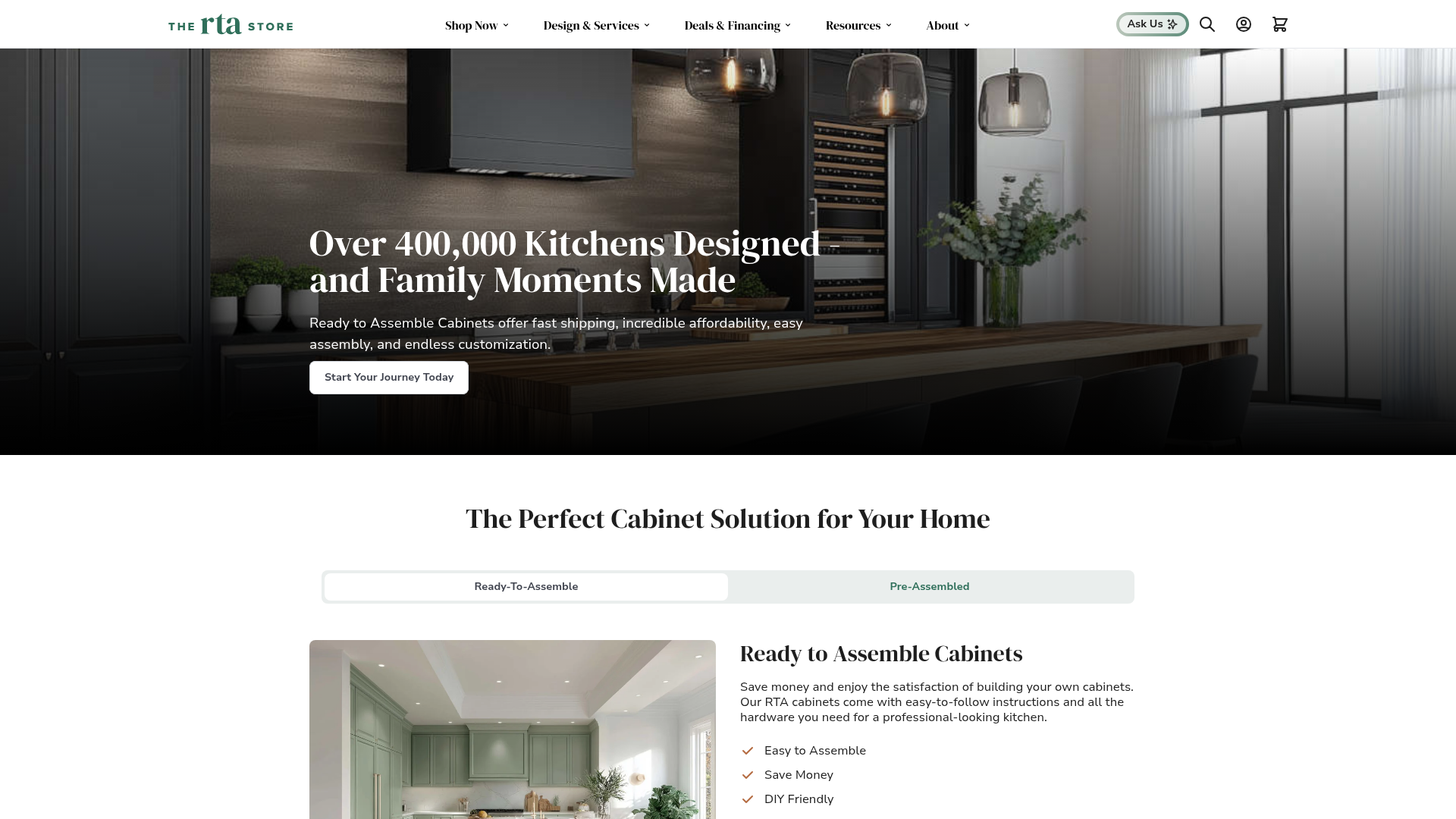
For the amount being spent on this campaign and the traffic driving to this page, this many issues — especially on mobile — is bad end-to-end quality control. Desktop is only about 11% of traffic from this campaign; mobile is the other ~90%.
- “Chat with a designer” button doesn't work
- Comparison table doesn't format properly on mobile
- Page is missing proper padding and spacing on mobile
- Custom builder app doesn't work well on mobile — either include a disclaimer to use it on desktop or hide the button on mobile
- Doesn't stop overscroll, which creates scroll issues on mobile
- Not including www for the website doesn't auto-redirect
Overlapping pages
The professional-discounts and free-kitchen-room-design pages link to each other, which is confusing. The Platinum price is different on both, and nothing immediately conveys that these are for different people — only a selector on the form.
07 · Severity Matrix
What we found, ranked by the cost of ignoring it.
| Finding | Severity | Why it matters |
|---|---|---|
| $100K/mo campaign republished from 2023 with a broken landing page | CriticalActively losing money or making decisions on bad data. Fix first. | Legacy structure, repeated creative, and RET plus PROSP ad sets combined in one CBO. |
| MOF ads point to design software with no pixel and broken redirects | CriticalActively losing money or making decisions on bad data. Fix first. | No tracking on the destination, and the redirects land on broken pages. |
| Free Kitchen Room Design landing page broken on mobile | CriticalActively losing money or making decisions on bad data. Fix first. | ~90% of the traffic is mobile, and the chat button, comparison table, spacing, and builder all fail there. |
| $36K/mo campaign running on two-year-old lookalike lists | HighMaterially hurting performance. Should be fixed in the next 30 days. | Customer list lookalikes are outdated, and 42 ads are trimmed to 18 active with no refresh. |
| No dedicated retargeting campaign | HighMaterially hurting performance. Should be fixed in the next 30 days. | RET ad sets sit inside prospecting CBOs with the same imagery and copy. Not best practice. |
| Inconsistent exclusions causing audience overlap | HighMaterially hurting performance. Should be fixed in the next 30 days. | Ad sets target "people who liked your page" while excluding the same audience. |
| Campaign, ad set, and ad labeling references stale quarters | HighMaterially hurting performance. Should be fixed in the next 30 days. | Labels pointing to Q3 2023 and Q1 2022 defeat their purpose and confuse the data. |
| Audience segments, labels, and value rules are undefined | MediumInefficiency or risk. Address during the rebuild. | At this size of account, values and value rules should be informing the algorithm. |
| Purchase ROAS of 15.3 is unverified | MediumInefficiency or risk. Address during the rebuild. | $200/purchase against a $3K average purchase amount — the accuracy needs to be confirmed. |
| Half of the budget sits on top-of-funnel form fills | MediumInefficiency or risk. Address during the rebuild. | Those leads only pay off if sales or remarketing is actively working them. |
08 · Strategy Overview
Sequenced for impact, not effort.
Verify the data first, repair the destinations, then rebuild the structure so Meta's newer systems can actually work.
Verify the conversion data before scaling anything
Review conversion event logging for accuracy and confirm the Purchase numbers behind the 15.3 ROAS before any budget decisions are made on them.
Put a pixel on the design software and fix the destinations
Implement Pixel tracking for the design software, repair the broken redirects on the MOF ads, and correct broken website URL parameters and landing page destinations.
Rebuild the labeling and audience taxonomy
Replace stale time-stamped names with a naming structure that holds up, define audience segments in the advertiser settings, and set audience labels.
Separate retargeting from prospecting
Stand up a dedicated retargeting campaign instead of layering RET ad sets into prospecting CBOs with the same imagery and copy.
Clean up exclusions and refresh the lists
Resolve the overlapping exclusions, remove contradictions such as targeting and excluding the same page-liker audience, and rebuild lookalikes on current customer lists.
Modernize the legacy campaign structures
Move away from the 2023 build that predates Advantage+, split B2B and DTC out of the same campaign, and reduce redundant imagery and targeting across ad sets.
Assign values and value rules
At this size of account, values and value rules should be assigned so the algorithm is informed by what each conversion is actually worth.
Fix the Free Kitchen Room Design page for mobile
Repair the chat button, comparison table, spacing, overscroll, and builder experience, and clarify the overlap with the professional-discounts page.
09 · The Bottom Line
Truth before optimization.
“If the campaign data is accurate they are in a good spot. A lot of the strategy is recycling and not changing things that are known to work, even if they are years old. That isn't necessarily a bad approach. But the naming structure and some of the campaign setups can definitely be improved so they are not overly redundant and actually rely on the new systems Meta has built in the last few years.
Let's Talk
Thank you for reading.
The rollout plan that answers these findings is in the Proposal tab. The easiest way to move forward is a 60-minute project deep dive — pick a time that works and we'll walk through the findings and the build sequence.
Schedule a meeting with Craft Digital